
The silk that exists at the boundary of presence and absence — 8mm chiffon's sheerness, its float, and its luminous transparency have made it the defining fabric of feminine luxury dressing across more than a century of fashion history
Among the vast family of luxury silk fabrics, silk chiffon fabric holds a position of unique cultural significance and enduring design authority. It is the silk that appears to defy its own physicality — so light at 8mm that it floats rather than falls, so sheer that it reveals as much as it conceals, so luminously transparent that it appears to carry light through its structure rather than merely reflecting it from the surface. The appeal of silk chiffon is ancient — gauze-weight silks of comparable structure have been found in archaeological sites spanning thousands of years of silk production history — and it is entirely contemporary, appearing in the collections of the world's most prestigious fashion houses every season without interruption. At 8mm, silk chiffon occupies the sweet spot of the standard chiffon weight range: light enough to float and flow with extraordinary ease, substantial enough to hold its structure through cutting, construction, and the practical demands of active wear.
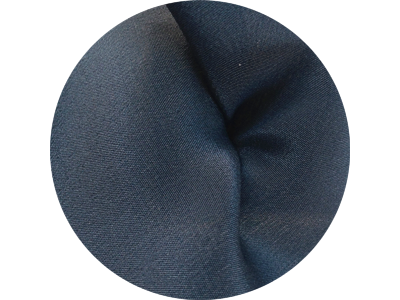
Silk Fabric Color More Than Hundreds Colors Available - Blue Night Color Silk Fabric
What makes silk chiffon uniquely itself
The chiffon weave achieves its characteristic sheerness and floating quality through a specific combination of fine yarns and open weave structure. Silk chiffon fabric is woven from very fine, highly twisted silk yarns — the high twist level causing the yarn to kink slightly, producing the very subtle surface texture that distinguishes chiffon from perfectly smooth plain-weave silks like habotai. The weave itself is a plain weave at relatively low thread count, producing a fabric that is genuinely open at the thread-intersection level — the spaces between threads are not empty, as in a mesh or gauze construction, but they are minimal enough that light passes through the fabric with very little obstruction, creating the characteristic translucency that defines chiffon's visual character.
The combination of the high-twist yarn's spring and the plain weave's open structure produces a fabric behavior unlike any other in the silk range. Silk chiffon does not simply fall under gravity as heavier fabrics do — it floats, suspended between the pull of gravity and the spring energy of its own twisted yarns, creating the hovering, animated quality that makes chiffon so visually distinctive in motion. When a chiffon garment moves — whether through the wearer's movement or through air currents — it responds with a fluidity and animation that no heavier, denser fabric can replicate. This quality, as much as the sheerness and the silk fiber's inherent luxury, has made silk chiffon one of the most emotionally compelling fabrics in the luxury range — a material that creates beautiful visual effects that are entirely impossible to achieve with any other textile.
Blue Night Color in Silk Fabric & Textile
Blue Night is a color of exceptional depth and atmosphere — a rich, dark blue that carries within it the specific quality of the sky in the deepest part of a clear night, that particular tone between the pure black of true darkness and the warm indigo-violet of twilight where the sky retains its blue character while approaching its darkest possible expression. It is neither the bright, saturated navy of formal dress tradition nor the true-black darkness of the deepest blue-black shades — Blue Night sits in the magnificent middle territory, deeply dark and deeply atmospheric, possessing both the formality of deep blue and the mystery of approaching darkness in a single tone of considerable complexity and considerable beauty.
In silk fabric, Blue Night achieves an expression of particular magnificence. The natural protein luster of mulberry silk interacts with the deep blue tones of the Blue Night dye in a way that prevents the color from appearing flat or muted despite its depth — the silk's natural warmth creates highlights of subtle luminosity within the deep blue ground, and the directional character of silk's luster means that Blue Night silk appears to shift between lighter and deeper expressions of the same deep blue as the viewing angle changes. In chiffon constructions, where the semi-transparent weave allows light to pass through the fabric and interact with the color from behind as well as from the surface, Blue Night acquires a quality of remarkable atmospheric depth — the deep blue appearing to contain layers of color, lighter where the chiffon layers overlap or where light concentrates, deeper where the fabric falls in folds away from light sources.
The history of deep blue in luxury textile is one of the most richly documented in the entire history of dye and color. Across virtually every major historical textile tradition, deep blue was among the most technically demanding and most materially expensive of all colors to produce at depth and consistency. Indigo — the primary source of deep blue in natural dye tradition — required elaborate fermentation vat chemistry and multiple immersion cycles to achieve the deepest tones, and the finest historical deep blues represented significant material and labor investment that placed them among the most prestigious of all textile colors. In contemporary silk production, Blue Night is achieved with modern acid dyes formulated for exceptional depth, richness, and lightfastness in protein fiber — producing a depth of color that the finest historical indigo-dyed silks approached but that modern chemistry achieves with a consistency and reproducibility that historical methods could not reliably maintain.
In silk chiffon at 8mm, Blue Night creates fabric effects of extraordinary atmospheric beauty. The color's depth interacts with the chiffon's transparency in a way that produces a fabric whose darkness is not absolute but luminous — deep blue light visible through the chiffon layers, concentrated in the folds, diffused where the fabric floats freely. A Blue Night silk chiffon gown in motion is a visual event of considerable power — the deep blue appearing and disappearing through the floating layers, the silk's natural luster creating subtle highlights within the darkness, and the chiffon's animated float adding a quality of visual drama that no heavier fabric in the same color can approach. For evening and formal occasion applications where the fabric's own visual presence is a primary design element, Blue Night in silk chiffon is among the most powerful specifications available in the luxury range.
Blue Night in Fashion & Textile — Current Trends and Usage
Blue Night and the broader family of deep, atmospheric blue tones have been among the most consistently significant color directions in luxury fashion across recent seasons — a prominence driven by the enduring appeal of deep blue as the most universally flattering and most formally authoritative of all non-neutral dark colors, and by the specific moment's appetite for colors that communicate depth, sophistication, and a certain atmospheric gravity rather than the bright, saturated statement colors that dominated earlier fashion cycles. Deep blues in the Blue Night range read as simultaneously formal and creative, darkly elegant rather than severely black, and possessed of an emotional resonance — the associations with night sky, with depth of water, with the particular quality of urban nocturnal light — that gives them a distinctive character absent from both black and from brighter blues.
On the runway, deep blue tones in the Blue Night family appear with exceptional consistency in evening and formal collections across all major luxury market tiers. For evening gown and formal occasion applications specifically, Blue Night in silk chiffon and other lightweight transparent constructions has established itself as one of the most technically ambitious and most visually powerful specifications in the formal dressing vocabulary — the transparency of the chiffon interacting with the depth of the color to create garments of layered visual complexity that solid-ground, non-transparent fabrics cannot approach. The ability of deep blue chiffon to create floating layers of color that shift in apparent depth and tone as the garment moves gives designers working in evening wear a visual vocabulary of considerable expressiveness that the most celebrated fashion photographers consistently seek out for editorial work.
In the luxury ready-to-wear market, deep blue alternatives to black for formal and evening dressing have seen sustained commercial growth as consumers increasingly seek color sophistication over the default formality of black. Blue Night silk — in chiffon, charmeuse, and heavier satin constructions — performs consistently across formal occasion categories as a color that reads as formal and appropriate for the most significant occasions while providing more personality and more visual distinction than black. For consumers who want formal occasion dressing that communicates individual aesthetic sensibility rather than convention, Blue Night is one of the most commercially compelling deep dark color choices in the luxury range — dark enough for the most formal contexts, distinctive enough to be a clearly personal choice.
For silk scarf and accessories design, Blue Night in sheer constructions like silk chiffon represents one of the most versatile and most visually striking color directions. Deep blue chiffon scarves function as both standalone statement accessories and as sophisticated layering elements — worn over paler clothing where the transparency creates a color-over-color layering effect, or paired with deep evening wear where the deep blue chiffon adds texture and movement without color contrast. For EZSilk's custom manufacturing clients, Blue Night is consistently one of the strongest-performing deep color specifications across all accessory categories, its combination of formal authority and atmospheric beauty making it one of the most universally appealing luxury color choices available.
Ideal applications
The extraordinary lightness, sheerness, and floating float of 8mm silk chiffon fabric define its applications across the full range of luxury fashion contexts where transparency, movement, and the silk fiber's irreplaceable sensory qualities are primary design considerations. Silk chiffon is among the most versatile fabrics in the luxury range precisely because its defining qualities — sheerness and float — are desirable across an exceptionally broad range of garment types and occasions.
- Evening gowns & formal occasion dresses
- Bridal overlay layers & veils
- Floating blouses & tops
- Luxury scarves & neck wraps
- Sheer overlay panels & inserts
- Resort & summer dresses
- Dramatic evening capes
- Lingerie & intimate layers

Silk chiffon versus georgette and organza
Within the family of sheer and lightweight luxury silks, chiffon occupies a distinct position alongside georgette and organza — three fabrics that share lightness and transparency as defining characteristics but differ fundamentally in surface character, drape behavior, and the specific design contexts for which each is most appropriate.
vs. Silk georgette (8–12mm): Georgette and chiffon are often confused but are distinctly different fabrics. Georgette uses a heavier, more tightly twisted yarn in a denser weave, producing a more opaque, more textured surface with a matte character and a more structured drape. Chiffon uses finer yarns in a more open weave, producing a sheerer, smoother surface with a slightly luminous quality and a more floating, less structured drape. Georgette is the specification for sheer fabrics that need more body and more surface texture; chiffon is the specification for the most ethereal, most transparent, and most animated sheer effects.
vs. Silk organza (8–12mm): Organza and chiffon are close in weight but opposite in drape character. Organza is crisp and self-supporting — it creates volume, holds shapes, and stands away from the body. Chiffon is fluid and floating — it conforms to gravity, clings gently to the body, and moves constantly. Organza is for structured sheer effects; chiffon is for fluid and floating sheer effects. Choosing between them is choosing between volume and flow — two entirely different design languages in the transparent weight range.
The layering advantage: Silk chiffon's unique combination of transparency and float makes it the superior specification for multi-layer applications. Multiple chiffon layers create compound transparency effects — each layer adding color depth while maintaining overall sheerness — and the layers float independently of each other, creating animated, dimensional visual effects in motion that single-layer constructions cannot approach. No other fabric in the transparent weight range performs multi-layer construction with the same visual and tactile results.
For the silk scarf designer, 8mm silk chiffon is the foundational fabric of the entire luxury scarf range — the fabric against which all others in the category are measured. A well-made silk chiffon scarf has a hand and float that no other fabric can replicate: weightless in the hands before it is worn, animated in air currents and movement when worn, and luminously transparent in a way that allows the color or print it carries to be seen through multiple layers simultaneously. For EZSilk's custom scarf manufacturing services, silk chiffon at 8mm represents the most commonly specified fabric across the full client base — its combination of luxury character, visual beauty, and practical versatility making it the natural default specification for the luxury silk scarf market.
Care & handling
| Method | Guidance |
|---|---|
| 🧺 Washing | Hand wash in cool water with pH-neutral silk detergent, using the gentlest possible agitation. At 8mm, silk chiffon is among the most delicate of all washable silks — the open weave structure and fine yarns require minimal mechanical stress to maintain both dimensional integrity and the floating character that defines chiffon's behavior. |
| 🌡️ Temperature | Cool water only. The fine yarns of the chiffon weave are more susceptible to heat damage than heavier silk fabrics — the small diameter of each individual thread means less silk fiber mass to absorb and distribute heat stress before fiber damage occurs. |
| 👕 Drying | Float the chiffon on the water surface to drain rather than lifting — the wet 8mm chiffon has almost no structural strength and can be permanently distorted by its own weight if handled carelessly when wet. Press gently between clean dry towels and lay flat to dry on a fine-mesh surface that allows air circulation through the open chiffon structure. |
| 🔥 Ironing | Low silk setting with a pressing cloth and the lightest possible contact pressure. Silk chiffon presses beautifully when handled correctly — the fine plain weave responds well to careful heat and produces a smooth, crisp finish that improves the fabric's floating quality. Always use a pressing cloth barrier and work on the reverse side for the most delicate pieces. |
| 📦 Storage | Roll loosely around acid-free tissue or fold very loosely — the 8mm weight means fold lines are generally not permanent and release with hanging, but storing with unnecessary fold pressure should still be avoided. Keep in breathable fabric bags away from anything that could snag the fine open weave structure. |
Sewing 8mm silk chiffon
Sewing with silk chiffon fabric at 8mm is one of the most technically demanding tasks in all of luxury garment construction — the combination of extreme lightness, sheerness, and the fabric's tendency to shift and float during cutting and stitching creates challenges that require specific, well-practiced techniques to resolve successfully. The rewards are proportional to the demands: well-constructed silk chiffon garments are among the most beautiful and most technically impressive in the entire luxury fashion range.
The fabric that has defined a century of luxury femininity — that has floated through every era of fashion history from the Edwardian tea gown to the contemporary red carpet, remaining always current because its beauty is rooted not in style but in the irreplaceable physical qualities of silk fiber in its lightest and most airy construction — 8mm silk chiffon is the foundation fabric of the luxury silk wardrobe, the specification against which all other sheer silks are measured, and the material that, more than any other, makes the case for silk as the world's great luxury textile irreplaceable by any synthetic alternative that has ever been attempted.
Silk fabric online by EZSilk offers free silk color card and free silk fabric sample swatch. EZSilk.com is the most trusted silk fabric company, silk scarf manufacturer that offers free silk fabric sample service as well as silk scarf sample while other competitors sell around $3.00 per silk fabric swatch sample.
EZSilk has been known as a luxury silk scarf manufacturers in the United States, a silk necktie manufacturer in the USA. Silk scarf production has been started since 2001 with custom silk scarves.
EZSilk emphasizes only high quality silk product and silk fabric.
Silk Scarf Manufacturer in the USA

EZSilk Offers High-End Silk Scarf
| Beyond providing premium silk fabric by the yard, EZSilk is renowned for our expert custom silk scarf manufacturing services. Whether you're a fashion designer launching a new collection, a brand seeking signature accessories, or an individual looking for bespoke scarves, our team brings decades of specialized knowledge to every project. EZSilk, a trusted name in the silk fabric industry for over 30 years, specializes in high-quality silk scarves crafted from 6A+ silk greige goods. This ensures an exceptional hand feel and vibrant color expression. As the leading silk fabric and scarf manufacturer in the United States, EZSilk brings extensive expertise in silk textiles, offering insights into various silk fabric types and timeless printed scarf designs. EZSilk is only dedicated to high-end silk scarf manufacturing and silk fabric products. |